Experience focused on implantology
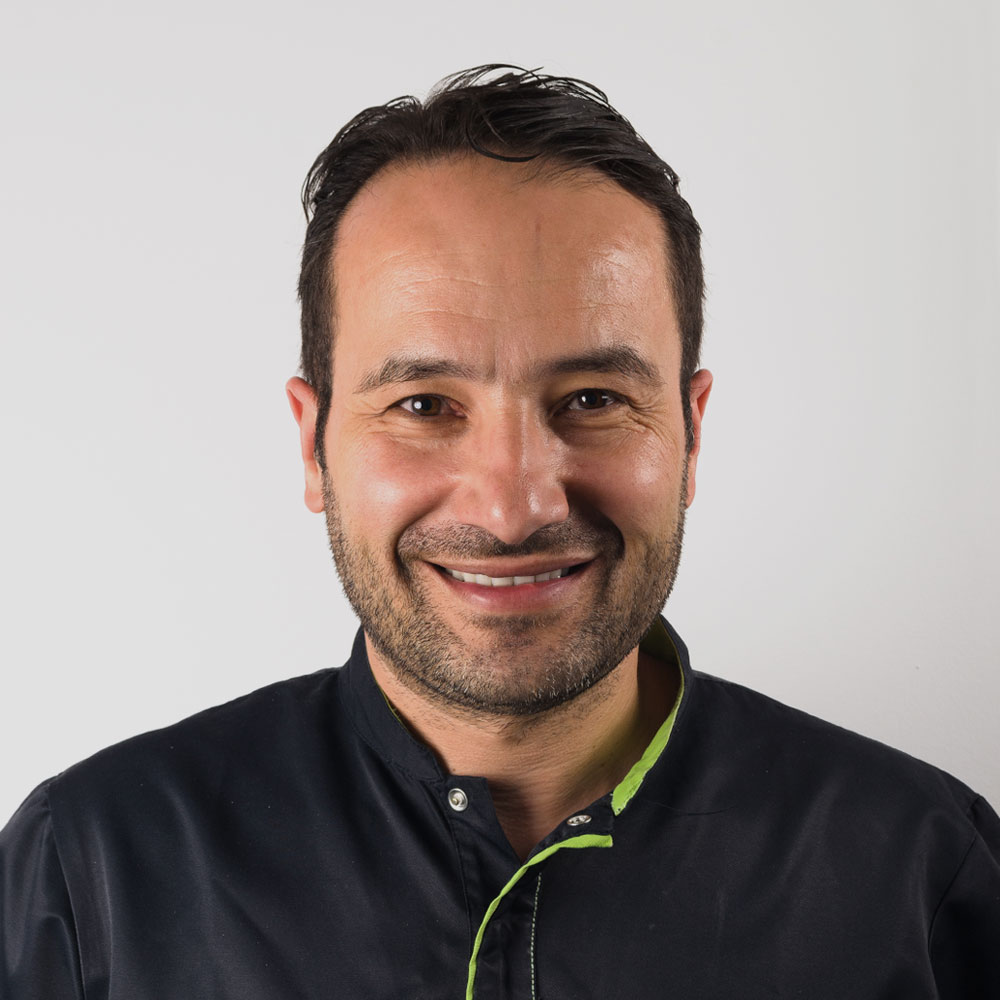
Dr Paulo Costa has practised dentistry for more than 25 years, with a significant part of his work devoted to implantology, oral surgery and oral rehabilitation.
Over his clinical career he has treated everything from a single missing tooth to full-mouth rehabilitations and cases of severe bone loss in the upper or lower jaw.
The aim is not to apply the same solution to every patient, but to determine the most appropriate approach for each clinical situation.
Areas of clinical practice
Implantology
Replacing lost teeth with dental implants and implant-supported restorations.
Full-mouth rehabilitation
Planning fixed solutions for patients with extensive tooth loss or no teeth at all.
All-on-X
Restoring complete arches with a strategically planned number of implants.
Atrophic jaws
Assessment and treatment of patients with limited bone.
Bone regeneration
Bone reconstruction and augmentation techniques, when needed to enable or improve an implant-supported restoration.
Sinus lift
Procedures to increase the bone available in the back of the upper jaw, in selected cases.
Pterygoid implants
A posterior anchorage option in certain cases of an atrophic upper jaw.
Zygomatic implants
A solution for specific cases of severe upper-jaw bone loss, after careful diagnosis and planning.
Remote anchorage techniques
Assessment of alternative anchorage solutions for patients with significant anatomical limitations.
Diagnosis before decision
Not every patient needs the most complex techniques. The PR Médicos principle is to look for the most predictable and appropriate solution, using only as much complexity as each situation requires.
The implant consultation may include:
- Medical history and a discussion of the patient’s expectations
- Clinical examination
- Dental and periodontal assessment
- X-ray assessment
- CT/CBCT scan, when needed
- Three-dimensional assessment of the available bone
- Discussion of the different treatment options
- An individual treatment plan
Have you been told you don’t have enough bone for implants?
A lack of bone does not necessarily mean there is no solution. Today there are different strategies for treating patients with bone loss, from regeneration techniques and grafts to alternative anchorage solutions.
The choice depends on your anatomy, your health, your goals, the surgical complexity and the risk–benefit balance of each alternative. A second assessment can help you understand the options available in your case.
Digital planning
In complex implant cases, three-dimensional planning makes it possible to assess important anatomical structures, the available bone and the possible implant paths before surgery. This helps define the surgical and prosthetic strategy.
Treatment doesn’t end with surgery
The success of an implant-supported restoration does not depend only on placing the implants. It means bringing together:
Surgery + Prosthesis + Function + Aesthetics + Hygiene + Maintenance
That is why planning starts with the intended prosthetic result in mind.
Book an assessment
Are you considering implants, do you need a full-mouth rehabilitation, or are you looking for a second opinion on a complex case?